
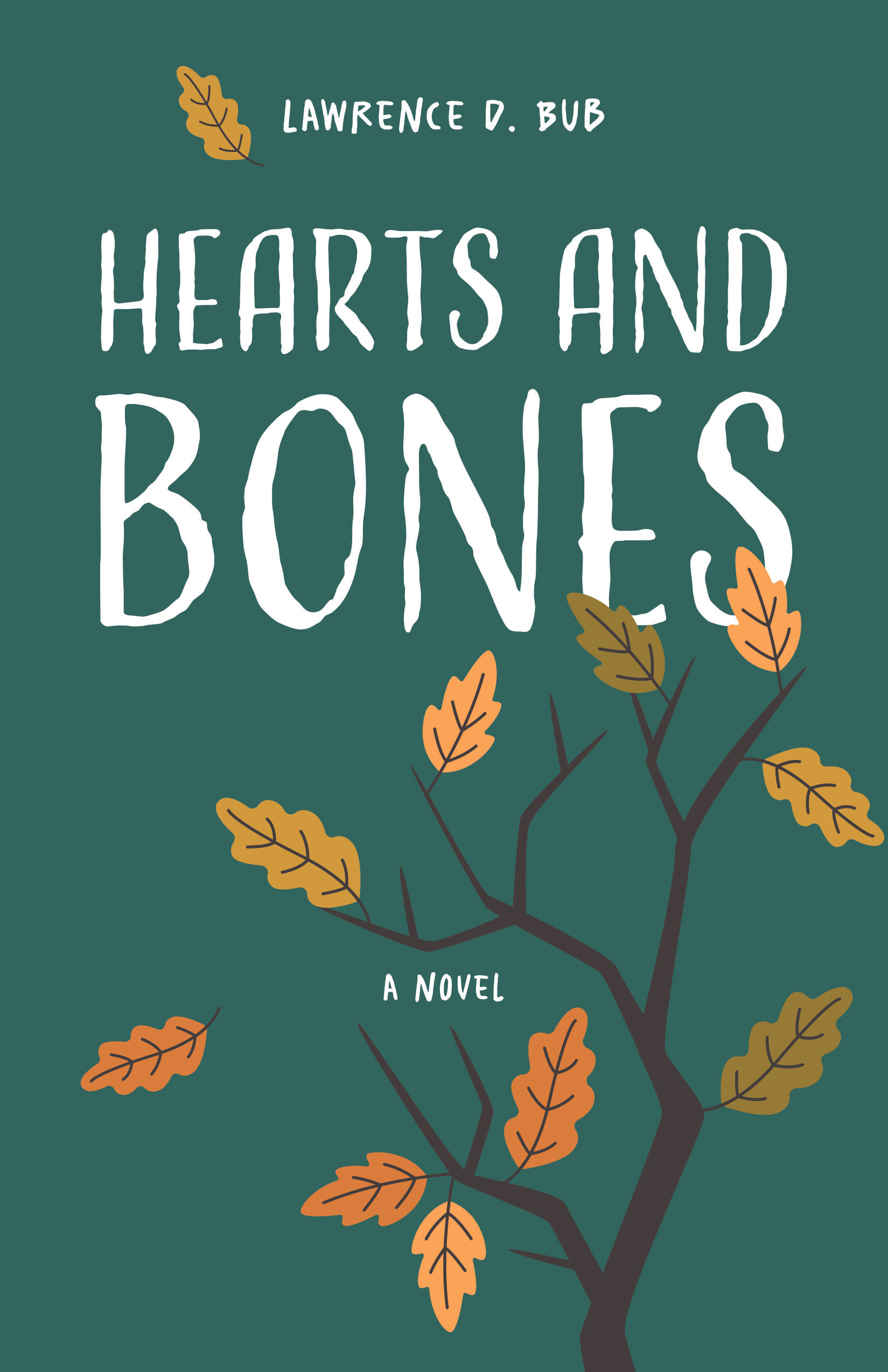
Hearts and Bones
Chapter one preview! A coming of age novel about first love, heartbreak, and becoming. Available January 13, 2026.

The Title
The book's title comes from two places, one of which probably led to the other.
First, Paul Simon's 1983 song and album, Hearts and Bones, with one of the most original first lines of all time, “One and one-half wandering Jews free to wander wherever they choose,” referring to himself and his then-partner, Carrie Fisher, who was half-Jewish, roadtripping through the Sangre de Cristo mountains in Colorado.
And second, the Indigo Girls lyric, “Hearts and bones from days of youth,” from their song “Secure Yourself,” which appears on their self-titled 1989 album, mentioned in the book. I’m guessing the Indigo Girls’ “hearts and bones” is a reference to Paul Simon’s song—how could it not be? Both describe tumultuous and formative relationships, and both are fantastic, well worth a listen.
The book's genesis undoubtedly had to do with watching our twin boys leave home for college. The flood of joy and tears that accompanies letting go, and the memory of what it felt like to be eighteen. A newborn adult. When every experience felt like either the beginning of the world or the end of it.
Their freshman year began shortly after Erin’s mother, Terri, who had been struggling with Alzheimer’s Disease, sadly passed away in her sleep. I suppose these contrasting life events and their accompanying emotions stirred the pot. One way or another, they all found their way onto the page. (Order Hearts and Bones)
If you’re curious, here’s a teaser. The first chapter, straight from the manuscript…
1997
Maya and her team followed their senior resident into the auditorium like tired chicks trailing a mother hen. It was Thursday afternoon, grand rounds, and Kelly’s brood of three walked along the row of fixed seats, past a pair of gray-haired roosters in long white coats, to the far side of the auditorium. Her team had just come off their call night and collapsed into the stiff seats, fighting to keep their eyes open in the soporific twilight of the hall. The afternoon’s speaker, a neurosurgeon, stood under the house-sized screen, nodding to colleagues and friends as the room filled with attending physicians, residents, interns, and medical students. His first slide was already illuminated: ‘The Impact of Deep Brain Stimulation on Advanced Parkinson’s Disease.’
It was the fall of Maya’s third year in medical school, the year when she and her classmates broke free from the classroom and exploded into the hospital, like baby birds, waddling around in short white coats, full of book learning and no idea what to do with it. At least now they could interact with real humans who had stories to tell, bodies to examine, and illnesses to treat. It was an exciting time, and the learning curve during July and August looked less like a curve and more like the trail of an Apollo rocket bound for the moon. Everything felt new and bewildering. But after those first summer months, she began to settle into the rhythm of it, which is another way of saying that the caffeine buzz of the early days had faded, replaced by the dominant sensation of every medical student in 1990s America—fatigue.
Most days, she arrived at the hospital at six, pre-rounded on her patients, then rounded again with Kelly, then rounded again with their attending—this month, a laconic researcher who rarely stepped out of the lab. Then she scribbled in charts, checked labs, wrote orders, and briefed patients until six or seven when she left the hospital, ate a quick dinner, and went to bed—those were the easy days.
The room lights dimmed and Maya slumped down in her chair, resting her head against the seat back. She loved grand rounds. Not for the lectures so much, but for the cool, dark room, and the delicious hour with absolutely nothing to do. They had been up all night, admitting patients from the emergency department and extinguishing fires on the floors. They would do it again four nights later.
The neurosurgeon introduced himself and clicked over the slide. A video began to play. It showed a man in a wheelchair, immobilized by Parkinson’s disease. Maya experienced a twinge of jealousy at the thought of sitting in a chair for weeks on end with nothing to do. Being confined like that looked so restful, but more than that, being beyond the mess of it all, leapfrogging life’s complicated choices and skipping ahead to the warm, nostalgic part seemed paradoxically liberating. The surgeon explained that the risks involved in the procedure meant it could only be attempted in patients with very severe disease. You had to be near catatonic to qualify for his study, and Maya felt suddenly ashamed of wanting to switch places with the man.
Kelly leaned over and whispered, “There is someone you should meet. I think you two would hit it off.”
Maya shifted her position, trying to turn the hard, plastic seat top into a pillow.
“I don’t do blind dates,” she said.
Of course, it was not true. She had done blind dates, but over the past few months, her life had become smaller. There was little time outside of school, and most of that was occupied by her mother, recently diagnosed with dementia, and her father, who was a wreck about it. The thought of going on a blind date sounded both humiliating and unnerving. Besides, she’d tried love before—it wasn’t for her.
A picture of the deep brain stimulator on the screen resembled something Torquemada might have used during the Spanish Inquisition. Then a graphic appeared of the subthalamic nucleus—the target—a tiny blue dot deep in the center of a transparent brain. Maya wondered who could have hatched such an insane idea—let’s shove an electric knitting needle through the brain and see if it works!
Kelly whispered again, “His name is Jerry. He is very cute and so sweet. We went to med school together. He’s a pediatric intern.”
Maya had once been interested in pediatrics herself. Her mother had worked for a pediatrician when she was a kid. But during college, she changed her mind, deciding to focus on psychiatry instead. She recalled her interview for medical school three years ago.
“Don’t hear that one much,” the retired internist had said when she mentioned becoming a psychiatrist. “Are you sure? What we need is primary care. Internal medicine, OB, pediatrics—boots on the ground!”
He waited for her to agree with him, but she had said nothing, and he made a mark on his notepad.
“Where do you see yourself practicing?” he asked.
“Probably Denver. My family is from here.”
He shook his head and made another note. Two wrong answers. Maya was aware of the nationwide shortage of primary care physicians, particularly in rural areas. She had been coached to say that she wanted to be a small-town pediatrician, which had once been true, but in the moment, she couldn’t bring herself to lie about it. In the end, she had barely squeezed in off the wait list just before school started. Of course, when the old internist asked why she chose psychiatry, she had no choice but to lie.
The neurosurgeon flipped through a few more slides. Maya didn’t remember them and may have dozed off. Then another video played. The caption below it read, ‘Four weeks post-op.’ The deep-brain stimulator had been inserted into the subthalamic nucleus of the man in the wheelchair, and he was no longer confined to the chair. He had a bandage around his head, but he was standing. He unzipped a tennis racket from its sleeve and began hitting groundstrokes. The transformation was remarkable, and the typically reserved audience burst into spontaneous applause. Waving down the applause, the speaker said, “Thank you. This is ultimately a hopeful story, but these are early days, and there is much yet to learn.”
Kelly leaned over. “Wake up, sleepy,” she said as Maya jerked. She blinked hard and waited for her eyes to refocus. Had the Parkinson’s guy really been playing tennis?
“If you change your mind about Jerry, let me know. I already told him about you.” She winked.
Still dazed, Maya shook her head. No—she was not going to change her mind. She was not interested in dating or relationships or romance. That part of her life was over. If she wanted to find love again, she’d get a cat.
The room was clearing. Maya wondered if the old internist who had interviewed her still came to grand rounds. She looked around but didn’t see him. That day, when he had asked her about psychiatry, she gave him her usual prepared answers—mental health was an underserved part of medicine, treating the mind was just as important as treating the body, maybe more so, she was interested in narrative, personal history, the stories that made people who they were. These assertions were not untrue. They just weren’t the real reason.
What she didn’t say, what she would never admit to anyone, was that it was because of a boy.