
Third Acts
A time for creation, integration, and alignment


Start creating
Erin and I became empty nesters in the fall of 2024. Our twin boys started college at Brandeis and Cal Poly, and life changed for us. The house is quiet (and clean). The beautiful chaos of living with teenage boys is gone. And it’s hard to escape the feeling that these are the first days of our third act. There are many ways to categorize the stages of life, but for me, at this moment in time, it breaks down like this:
Act one: Everything before kids
Act two: Raising kids
Act three: Kids taking flight
Truman Capote supposedly said, “Life is a moderately good play with a badly written third act.” He barely made it into his own third act, dying at age fifty-nine after struggling with alcohol and drug addiction for decades. But this does not have to be the case.
Frank McCourt published his first book, Angela’s Ashes, at sixty-six. Laura Ingalls Wilder was sixty-five when she published her first, Little House in the Big Woods. Raymond Chandler wrote his first detective novel, The Big Sleep, at fifty-one. The list goes on, and it’s not just writers. Stan Lee didn’t start drawing superheroes until he was forty-three.
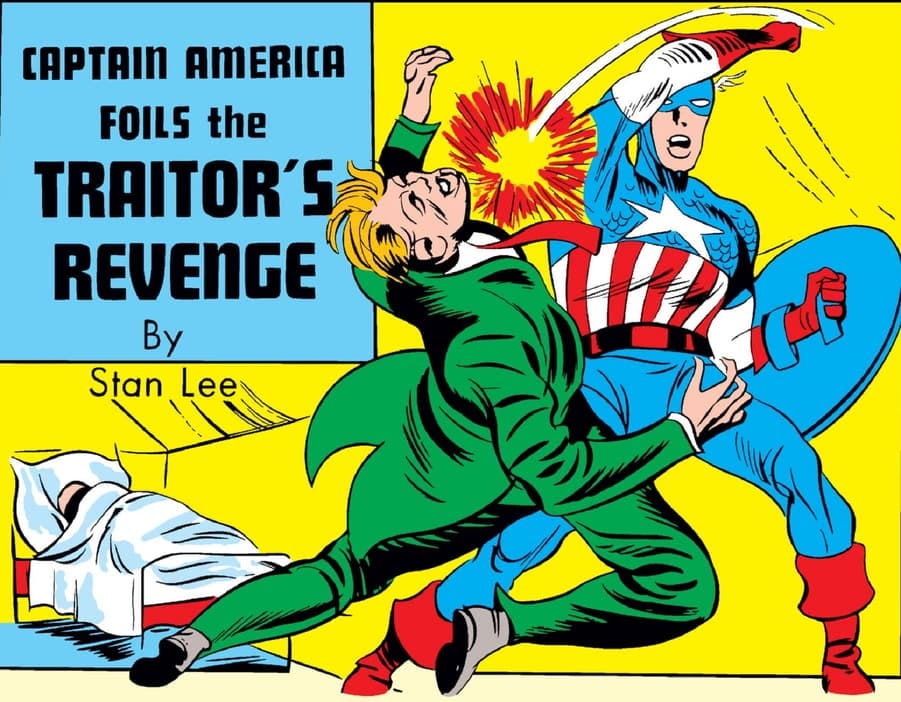
Stan Lee’s first comic, published in May 1941.
The third act need not be a time of degeneration, withdrawal, and capitulation. We don’t need to give up our dreams or quietly fade away. Given the intersection of accumulated wisdom from life experience, freedom from expectations, and free time from not raising children, the third act might actually be the best time to start creating.
Integration over fragmentation
One thing that intrigues me about this phase of life is its tendency toward integration rather than fragmentation. Earlier life chapters often involve compartmentalization. For most of us, our career is separate from our family is separate from our passion. The third act allows for synthesis, weaving together the previously disconnected threads of our experience into something wholly new.
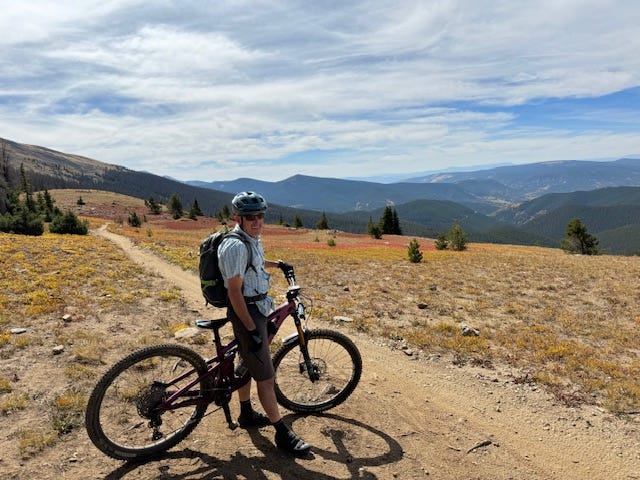
Neuroscience supports this potential for late-life creativity. While processing speed may decline, pattern recognition and emotional regulation often improve. Our brains become more adept at making novel connections between disparate domains, precisely the cognitive skill most associated with innovation. And this doesn’t need to be artistic in the traditional sense. As Rick Rubin, the acclaimed music producer, says, “Creativity is a fundamental aspect of being human...To create is to bring something into existence that wasn’t there before...a conversation, the solution to a problem, a note to a friend, the rearrangement of furniture in a room, a new route home to avoid a traffic jam.” I think about my friend, David, an avid mountain biker in his mid-fifties, who spends summer days stringing together fire roads and backwoods mountain trails into new and beautiful loops through Grand County, Colorado.
Finding Alignment
Perhaps most compelling is how third acts often involve a return to abandoned interests or the pursuit of long-deferred dreams. The concert pianist who returns to composition, the executive who opens a bookstore, the mother who starts dancing again. All represent not merely new beginnings but homecomings to essential aspects of ourselves. Finding fulfillment in the later years is not merely about activity but about alignment. In exploring our creative side, we bring our external expression into alignment with our internal values, and in so doing, offer something distinctive and unique to the world that is at once personally rewarding, socially valuable, and undeniably beautiful.
Glad to see you creating in your 3rd act!